

MT4 or MT5 for Your White Label: Choosing the Platform With Care
The platform you pick becomes part of your identity. Choose it for the clients you hope to serve and the road you hope to travel, not just for what is familiar.
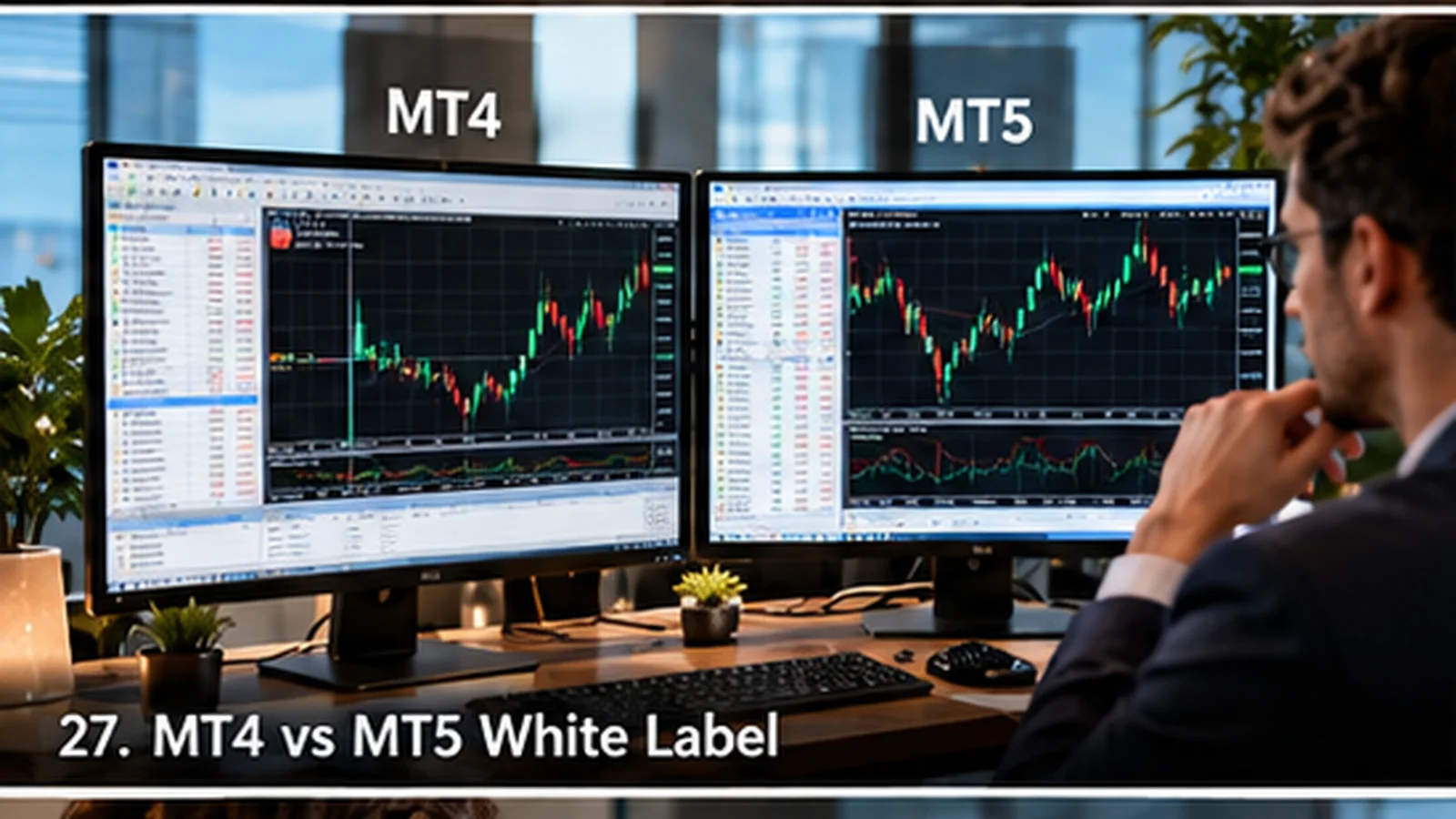
Think about your clients first
Which platform will your first clients prefer? Ask them. MT4 has a long retail history, and MT5 is newer and wider.
Think about the tools
MT4 uses MQL4 and MT5 uses MQL5, so expert advisors and indicators are not interchangeable. If your clients depend on existing tools, factor in the work of moving them.
Think about what you want to offer
MT5 supports more asset classes and has both hedging and netting modes. If you want a broad product range, it gives you more room. See MT5 and CRM.
Think about the supporting cast
Check that your CRM, bridge and payment partners support your chosen platform; see the Manager API story.
Decide with your future in mind
Choose MT4 if your audience and tools depend on it. Choose MT5 if you want range and a longer runway. See MT4 white label and MT5 white label turnkey.
Try both yourself
Spend an hour using MT4 and an hour using MT5 as a client would: place trades, add indicators, use the mobile app and check the account history.
You will form an opinion that no comparison table can give you, and you will understand your clients’ choices better.
Think about your clients first
Before comparing features, think about the people you want to serve. Which platform do they use today? How do they feel about change? What do they love about it, and what do they wish were different? Their habits are the most important facts in this decision.
If you can, speak to a handful of clients or prospects. Ask them to show you how they trade. You will learn more in an hour of watching than in a day of reading comparisons.
Think about the tools
Traders often have favourite indicators and automated tools. If these live on one platform, they weigh heavily. Ask which tools are essential, whether they exist on both platforms and what it would take to rebuild them.
A platform your clients cannot use their tools on will feel like a locked door, however modern it is.
Think about what you want to offer
List the instruments and account modes you hope to offer, and check each platform’s support for them. Consider whether you want to offer both hedging and netting, a wide range of markets or particular order types.
If your plans are modest at first, either platform may serve you. If they are ambitious, one may fit better.
Think about the supporting cast
A platform is part of an ecosystem: your CRM, payment providers, liquidity bridge, reporting and support. Ask whether each of these works well with each platform and whether your provider has deep experience with both.
The platform that fits the supporting cast you already have, or plan to have, will feel smoother to run.
Decide with your future in mind, and try both yourself
Think about where you want to be in three years. A platform that fits today but traps you tomorrow is not a good choice. Spend an hour with each platform as a client: place trades, add indicators, look at statements, use the mobile app. You will form an opinion no table can give you.
A story about two traders
Two traders arrive at your brokerage on the same day. One has used MT4 for years and relies on a handful of automated tools he has refined over time. The other is new to trading and has only ever used mobile apps. Which platform feels right?
For the first, familiarity and tools matter most. For the second, clarity and modern charts may matter more. Your brokerage will meet both kinds of people, and the question is which you want to serve first. Thinking of real faces turns an abstract comparison into a human one.
Questions to ask yourself
Who do I want to serve first? What tools do they depend on? How would they feel about moving later? What do I want to offer in three years? Which platform does my provider know best? Which will I be glad to support?
Write your answers in a few sentences and share them with your team. The conversation will probably clarify more than another hour of reading.
Keeping a door open
You do not need to decide forever. Choose the platform that fits today, tell clients you will keep listening and plan how a move might work. Keeping a door open costs little and spares you a feeling of being trapped.
Letting the decision rest
After comparing, sleep on it. Return to your notes the next morning and ask whether the choice still feels right. If a worry remains, name it and find a way to test it.
A calm decision made after a night’s rest is usually better than one made at the end of a long meeting.
Frequently asked questions
Which is better, MT4 or MT5, for a white label?
It depends on your clients, tools, instruments, supporting systems and plans.
How do I find out what clients prefer?
Ask a handful of them, and watch how they trade.
Can I offer both?
Possibly, with higher operating costs. Ask your provider.
Should I try the platforms myself?
Yes. Spend time as a client on each.